Key Points on Residency Status and Child Custody – Prepare in Advance
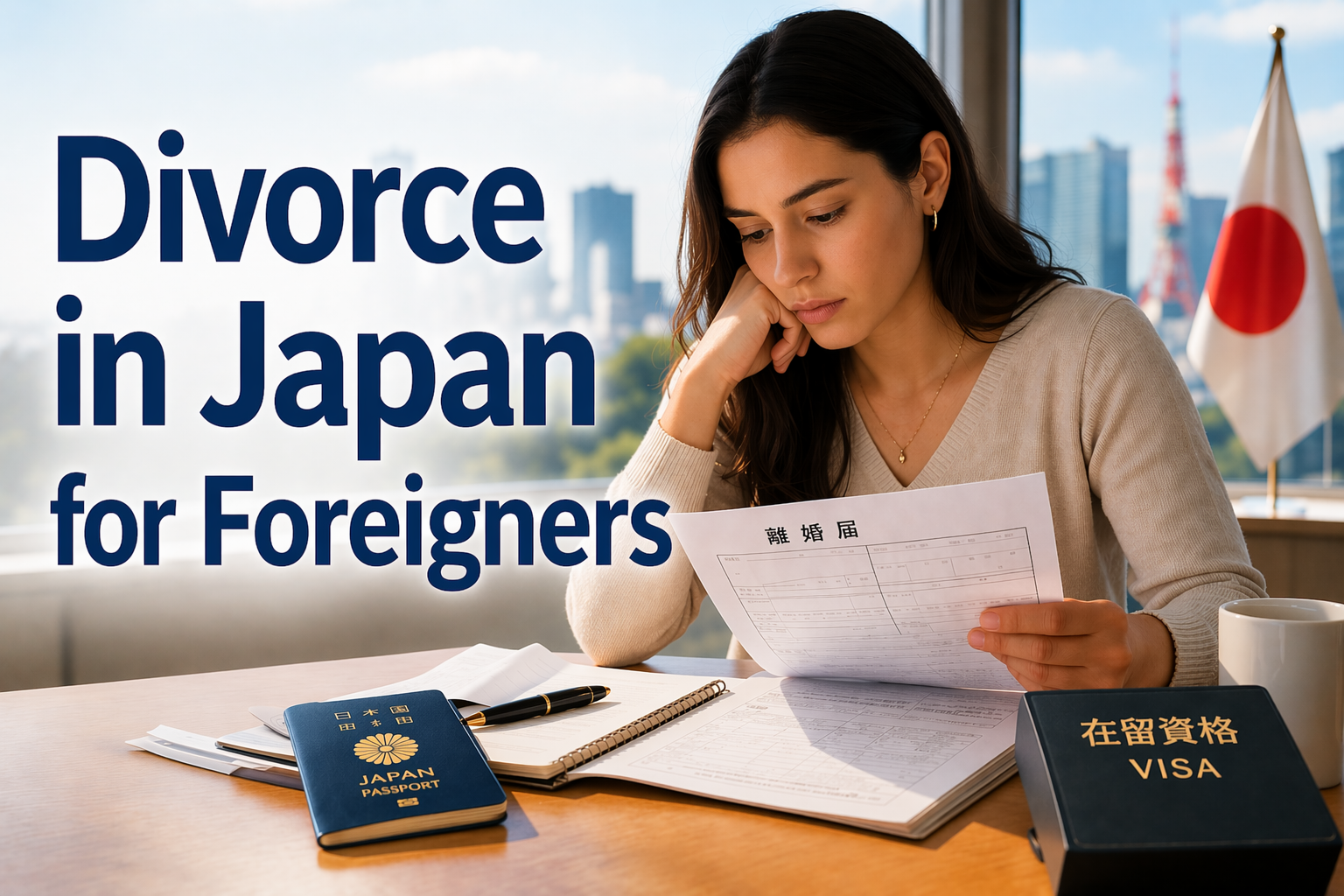
If you are a foreign national considering divorce from a Japanese spouse or a permanent resident in Japan, you may be worried about your visa status and your future life in Japan.
If you already have permanent residency, divorce usually does not affect your status. However, if you hold a “Spouse of Japanese National” or “Spouse of Permanent Resident” visa, you will likely need to change your status after divorce.
If you are still considering divorce, it is very important to start preparing now so you can continue living in Japan after the divorce.
For Those Without Children
If you do not have children, it is important to secure employment as early as possible. Even part-time or temporary work is acceptable.
When applying for a visa change or renewal, immigration authorities will evaluate your financial stability. You may be required to submit:
- Salary statements (preferably for at least 3 months)
- Tax certificate (even if non-taxable)
- Tax payment certificate
- Copy of health insurance
In practice, if you have been married for a certain period (generally around 3 years as a guideline) and your life in Japan is stable, you may be eligible to change your status to “Long-Term Resident.” However, this is decided on a case-by-case basis.
Also, since spouse visas require a genuine marital relationship (especially cohabitation), long-term separation may require explanation.
After divorce, you must notify the immigration authorities in Japan within 14 days. This is a legal obligation.
For Those With a Japanese Child
About Divorce and Custody
If you have a child with a Japanese national, custody must be determined at the time of divorce.
As of April 1, 2026, Japanese law allows joint custody as a new option, in addition to sole custody. However, custody decisions are made based on the best interests of the child.
If both parties agree, you can proceed with a mutual divorce by submitting a divorce notification form. If no agreement is reached, the case will go to family court mediation, and if necessary, court judgment.
The Katei Saibansho can arrange interpreters if needed (fees may apply).
Custody is not determined by nationality. Factors such as the child’s stability, caregiving history, income, and living conditions are considered.
Visa Status After Divorce
If you hold a “Spouse of Japanese National” visa, you will need to change your status after divorce.
If you are raising a Japanese child, you may be eligible for a “Long-Term Resident” visa.
Income is an important factor in the application. Even part-time work is acceptable, but you should demonstrate financial stability.
If your income is low, you may need to explain your situation.
You may also apply for government support (such as child allowance for single parents), and this can be included in your application.
Divorce Procedures
For mutual divorce:
- Divorce form signed by both parties
- Signatures of two adult witnesses
- ID verification required at submission
For court divorce, additional documents are required depending on the procedure (mediation record, judgment, etc.).
If a foreign national is involved, additional documents may be required. It is recommended to confirm with your local city office in advance.
Legal Consultation
You can also seek legal assistance through Houterasu (Japan Legal Support Center).
Depending on your income, free legal consultation may be available.https://www.houterasu.or.jp/site/english/multilingualinformationservice.html
Final Note
Preparation is key when it comes to visa status and life after divorce in Japan. Since requirements vary depending on individual circumstances, please feel free to seek professional advice if you are unsure.